
How to Physically Design the Ideal 21st Century School
From the point of view of an architect
What does the ideal 21st-century school look like in practice?
This article is part of an ongoing collaborative series that brings the School Matrix to life; a blueprint designed to reimagine education for the future. By exploring real-world case studies from pioneering schools and programs around the world, we aim to explore practical ways to embed life skills, self-discovery, and purpose into everyday learning.
In this collaborative article, we explore how schools can design physical environments that embody 21st century principles through the brilliant mind and work of Prakash Nair and his architectural firm Education Design International.
Education Design International is a global leader in education planning and architectural design with numerous Industry awards for excellence. EDI builds and renovates school facilities for today and tomorrow with one primary goal in mind —to improve learning.
Prakash Nair, CEO of EDI, is a globally acclaimed architect and educator who specializes in the design of innovative schools. He is the recipient of many international awards, including the A4LE MacConnell Award, the highest honor worldwide for school design.
In your view, what does the ideal 21st-century school look like architecturally? Both in its physical form and in the way it shapes how students learn, move, connect, and grow.
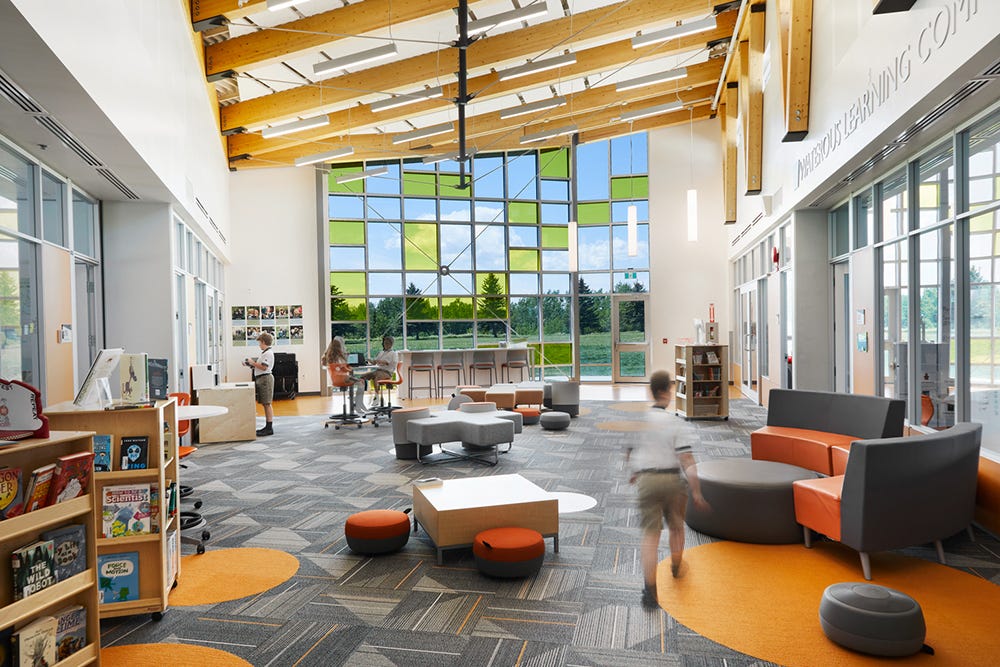
Prakash: The ideal 21st-century school is a living, breathing ecosystem that adapts to the needs of its learners and its community.
Physically, this kind of school is organized not around corridors and classrooms but around learning communities.
Each learning community serves around 100 to 150 students with a team of 4 to 6 teachers who share responsibility for the group. This scale allows relationships to flourish while still enabling interdisciplinary learning and collaboration.
Movement is natural and encouraged. Students do not sit in one place for six hours. Instead, the architecture invites them to move between zones that suit the task at hand—whether it is deep thinking, hands-on experimentation, group dialogue, or solitary reading.
Connection is at the heart of the design. Visual transparency, open lines of sight, and indoor-outdoor continuity break down the isolation that traditional schools impose. Students see each other. Teachers see students. Nature is always nearby. This fosters a culture of trust, well-being, and shared responsibility.
Growth is supported by giving students voice and choice. The design does not dictate how learning happens. It offers options and trusts students to take the lead. It is a space that grows with the learner rather than one that boxes them in.
Most importantly, the ideal school is not a fortress. It is a community anchor. It includes spaces that welcome parents, invite partnerships, and reflect the culture and values of the local context.
Schools that do this well stop feeling like institutions and start feeling like places of possibility.
Which top design patterns do you recommend for giving students greater autonomy over how, where, and with whom they learn?
Prakash: If we want students to become self-directed, confident learners, then we have to stop designing schools that assume they can’t be trusted.
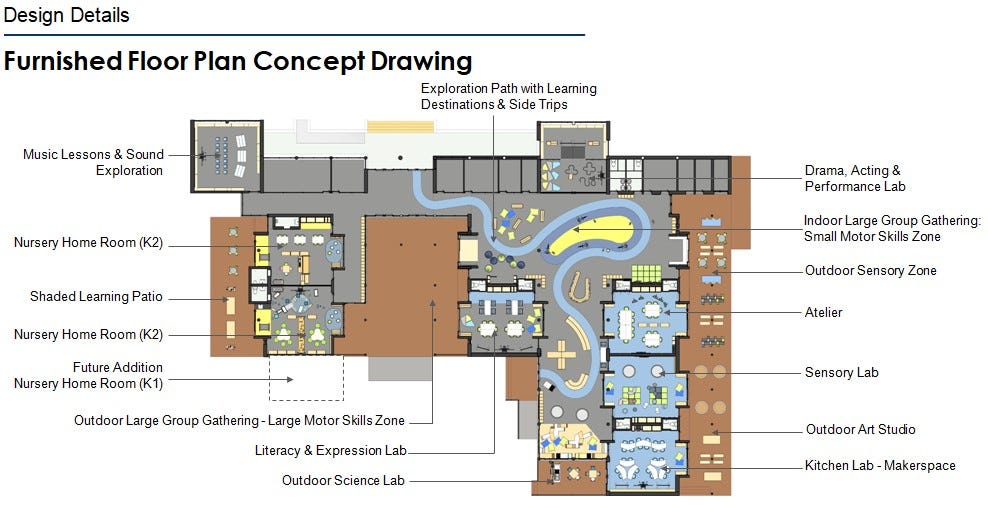
To promote real autonomy, school design must do three things: offer choice, support movement, and create trustworthy flexibility. Over the years, we’ve developed and tested design strategies that make this shift possible and even joyful.
Here are some of the most impactful:
Learning Studios that support multiple modalities
Unlike traditional rectangular classrooms, Learning Studios are designed to accommodate different types of learning within the same space. They may include quiet zones, small-group areas, and project corners, and are often L-shaped or connected to adjacent breakout zones. This allows students to move between activities and choose how they engage.Project zones and maker spaces
These dedicated areas let students explore hands-on learning, interdisciplinary inquiry, and real-world problem-solving. The ability to pursue meaningful work in a self-paced way builds both competence and ownership.Breakout areas and shared commons
Just outside Learning Studios, these zones give students natural options for small group work, quiet focus, peer tutoring, or independent study. The availability of varied settings encourages students to make thoughtful choices about where and how they learn best.Caves, campfires, and watering holes
These archetypes—spaces for reflection, storytelling, and social learning—help students find environments that match their cognitive and emotional needs. Being able to navigate between these spaces fosters both autonomy and self-awareness.Glass walls and passive supervision
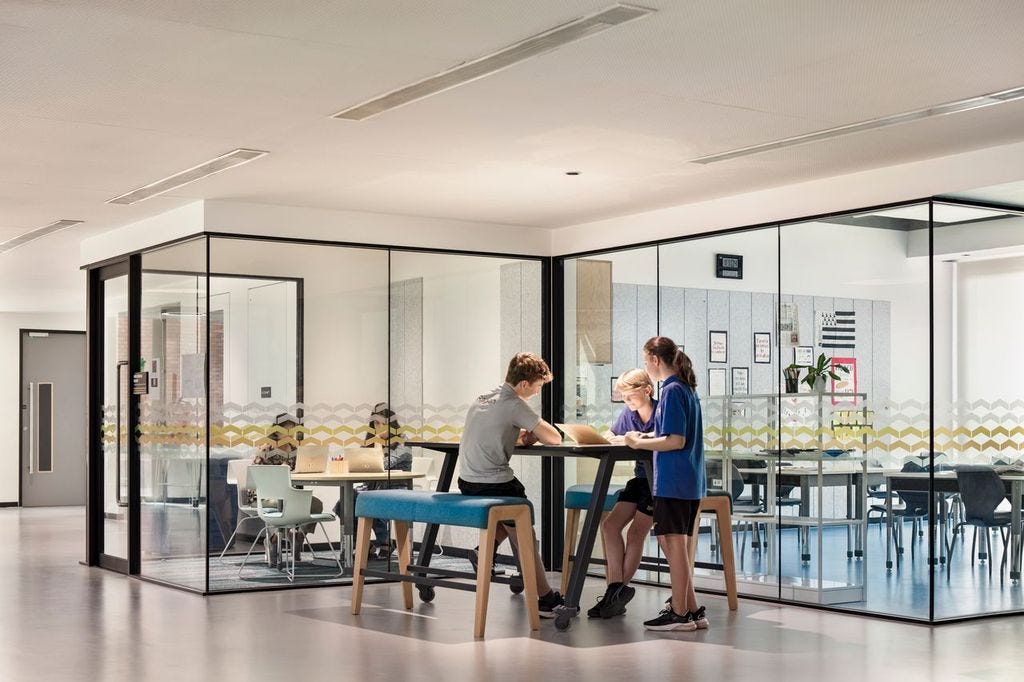
Spaces that are enclosed but visually connected create trust without constant policing. When students feel seen without being surveilled, they tend to take greater responsibility for their behavior and learning.Flexible, student-directed furniture
Movable chairs, standing options, floor seating, and reconfigurable tables let students shape their own workspace. This reinforces a sense of ownership over how they learn.
What design patterns or features have you seen most directly influence student happiness and mental health?
Prakash: Over the years, I’ve learned that student well-being is not an “add-on” to learning. It is the foundation.
Certain design moves consistently stand out for their positive impact. These aren’t theoretical. They are patterns we’ve used in dozens of projects, and they’ve been affirmed by students, educators, and research alike.
A few examples:
Welcoming entries that create a sense of arrival and safety
A warm, human-scaled entrance reduces anxiety and signals care from the moment a student walks in.Natural light and visual access to nature
These are powerful mood regulators. They reduce stress, boost attention, and help create a calming atmosphere throughout the day.Indoor–outdoor fluidity
Students need to move, breathe, and connect with the living world. Direct access to outdoor zones, whether for learning or quiet reflection, supports both mental clarity and emotional balance.Small social commons and cafés
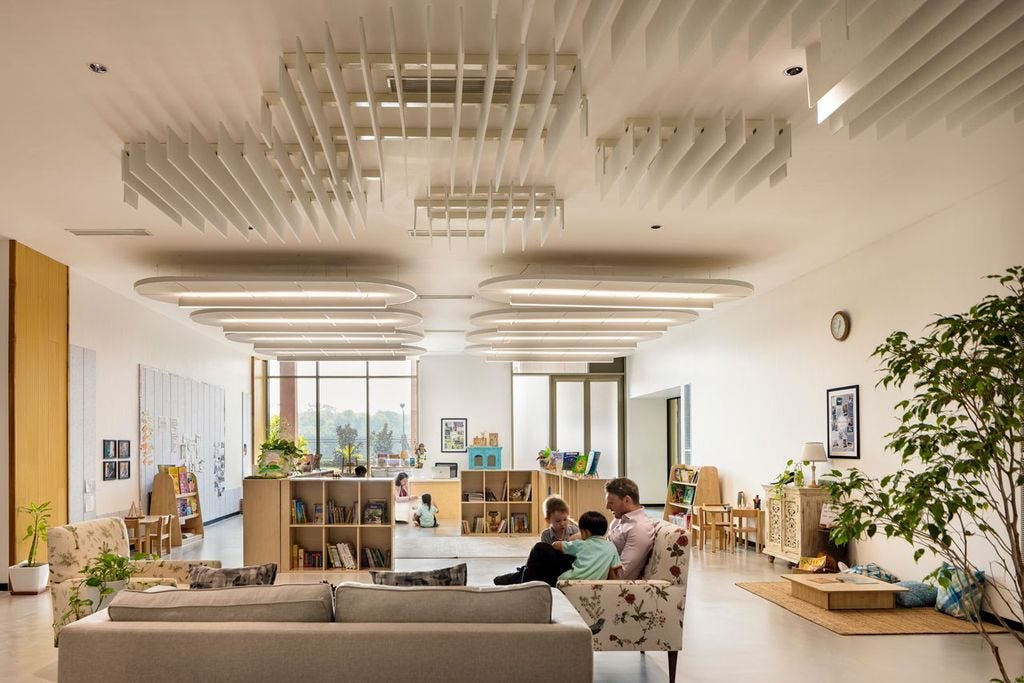
Instead of massive, noisy cafeterias, we design spaces that feel more like living rooms. These support organic social interaction, helping students feel seen and connected.Soft seating and flexible furniture
Choice matters. When students can sit in a way that suits their mood or activity—on a stool, a beanbag, or a window ledge—they feel more in control and more comfortable.Quiet zones and reflective spaces
Not every student wants to be “on” all the time. Providing nooks for solitude honors different temperaments and helps students self-regulate.
Many of these features are part of the design vocabulary we laid out in The Language of School Design. That book was never meant to be prescriptive. It was created to offer a shared language for creating environments that support the whole student—emotionally, socially, and cognitively.
What outdated assumptions are still influencing the way most schools are physically designed?
Prakash: The single most damaging assumption still embedded in school design is the belief that learning happens best when students are grouped by age, sit in rows, and receive knowledge from a single authority figure at the front of the room. This factory-era model, often called cells and bells, was designed not to empower learners but to manage them efficiently. And unfortunately, despite decades of pedagogical progress, this assumption still underpins the vast majority of school buildings today.
Another outdated belief is that school is a preparation ground for the real world. In this view, childhood is merely a rehearsal for adult life, and schools are designed to simulate workplaces rather than honor childhood as a meaningful stage of life in itself. This mindset creates environments that are sterile, rigid, and disconnected from the emotional, physical, and creative needs of children.
A third assumption is that learning is a linear process best managed through standardization: same content, same schedule, same metrics. This drives a design bias toward identical classrooms, narrow hallways, and an overreliance on testing infrastructure rather than on spaces for exploration, wellness, or collaboration.
What shifts are needed to create spaces that truly empower students to thrive?
“Schools should not be designed to deliver instruction. They should be designed to unleash learning”.
Architecturally, we must break down barriers—both literally and metaphorically. Instead of corridors lined with cells, we need interconnected learning communities where students can move, collaborate, and find spaces that support the task at hand. Instead of a rigid teacher-at-the-front setup, we need studios, hubs, and breakout spaces where educators serve as facilitators and mentors, not gatekeepers of information.
The physical space itself should invite curiosity, movement, social interaction, and emotional safety.
At the heart of it all is this shift: from designing for control and efficiency to designing for connection and empowerment.
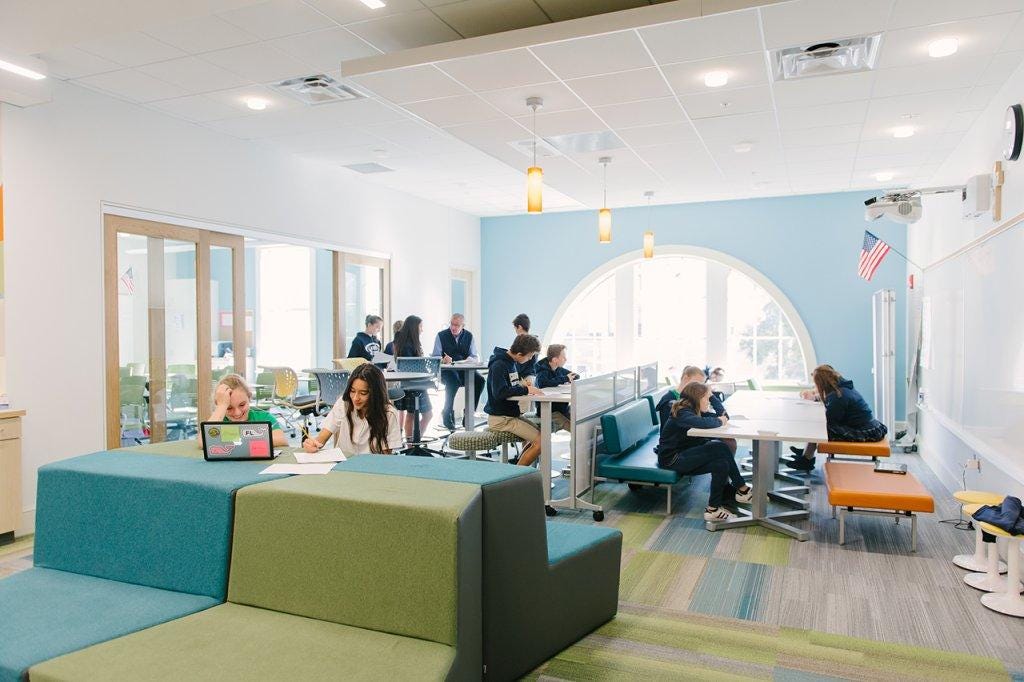
How can schools with limited budgets, such as microschools or community schools, incorporate key principles of 21st-century learning design without relying on expensive architecture?
Prakash: In lower-budget settings, meaningful change often begins with mindset. Schools can make significant progress simply by challenging outdated assumptions and exploring how their existing spaces might support more movement, choice, collaboration, and trust.
Even modest environments can become powerful when they:
Encourage learners to take ownership of how and where they learn.
Foster connection and belonging through shared and adaptable spaces.
Reflect student voices and evolving projects rather than static displays.
That said, well-designed infrastructure remains an important equity issue. All students deserve environments that are safe, welcoming, and suited to human development.
What is the most basic way a teacher could rearrange their classroom tomorrow to be more in line with 21st-century learning design?
Prakash: If a teacher is working within a traditional school layout and wants to take a first step, they can begin by using whatever freedom they have to break the mold.
Remove the front.
Loosen the rows.
Allow movement.
Let students choose where and how they work.
Invite them to help shape the environment with their voices and actions.
But let’s not pretend this makes the classroom a 21st-century space. Real transformation requires replacing the classroom-corridor model entirely—with small learning communities, shared learning commons, maker zones, and outdoor environments that reflect the full spectrum of how children grow, connect, and thrive.
Until we are willing to rethink the architecture of school itself, rearranging furniture will always be a limited gesture. The real shift begins when we question why the classroom still exists at all.
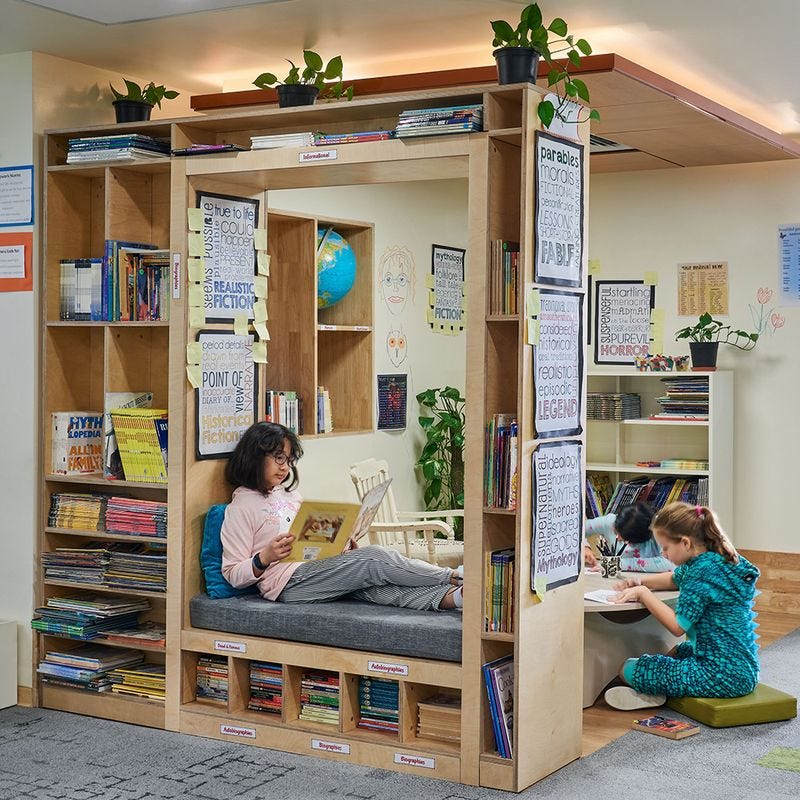
Watch Prakash Nair’s TEDx Talk to learn more about his work and vision. Or have a look at his books!
About the author and collaborator:
Melina Maghazehi is the Founder of Schools for Purpose, an initiative dedicated to creating collaborative blueprints and roadmaps for designing future ready schools that nurture life skills, self discovery and purpose.
Prakash Nair, CEO of EDI, is a globally acclaimed architect and educator who specializes in the design of innovative schools.
Photo Credits
Education Design International
Fielding Nair International
Andre J. Fanthome